Photreon's Solar Panels Could Revolutionize Green Hydrogen Production
Startup Photreon Develops Photoreactor Panels for Green Hydrogen Production
The startup Photreon has developed photoreactor panels designed to enable low-cost, scalable production of green hydrogen directly from sunlight and water. A spin-off from the Karlsruhe Institute of Technology (KIT), the company's technology targets both decentralized projects and large-scale facilities in sun-rich regions.
To date, green hydrogen production has typically relied on grid infrastructure. Photreon's photoreactor panel aims to change that by enabling hydrogen to be generated directly from sunlight and water.
"Our photoreactor panel replaces both photovoltaics and electrolyzers in a single step," explains Maren Cordts of KIT. "This significantly reduces system costs and complexity in green hydrogen production."
Direct Hydrogen Production via Photocatalysis
Photreon's approach is based on photocatalysis, a process in which light does not generate electricity—as in photovoltaics—but instead directly triggers a chemical reaction. Photoactive materials absorb solar energy, exciting electrons that then drive the splitting of water into hydrogen and oxygen.
The company has now implemented this principle in its photoreactor panel, patented by KIT. Inside the panel, sunlight is directed onto the active material, which performs the water-splitting reaction.
Applications in Decentralized and Large-Scale Projects
The one-square-meter prototype is designed for mass production using cost-effective materials. Thanks to its modular design, it can be deployed on a small scale or linked into larger arrays.
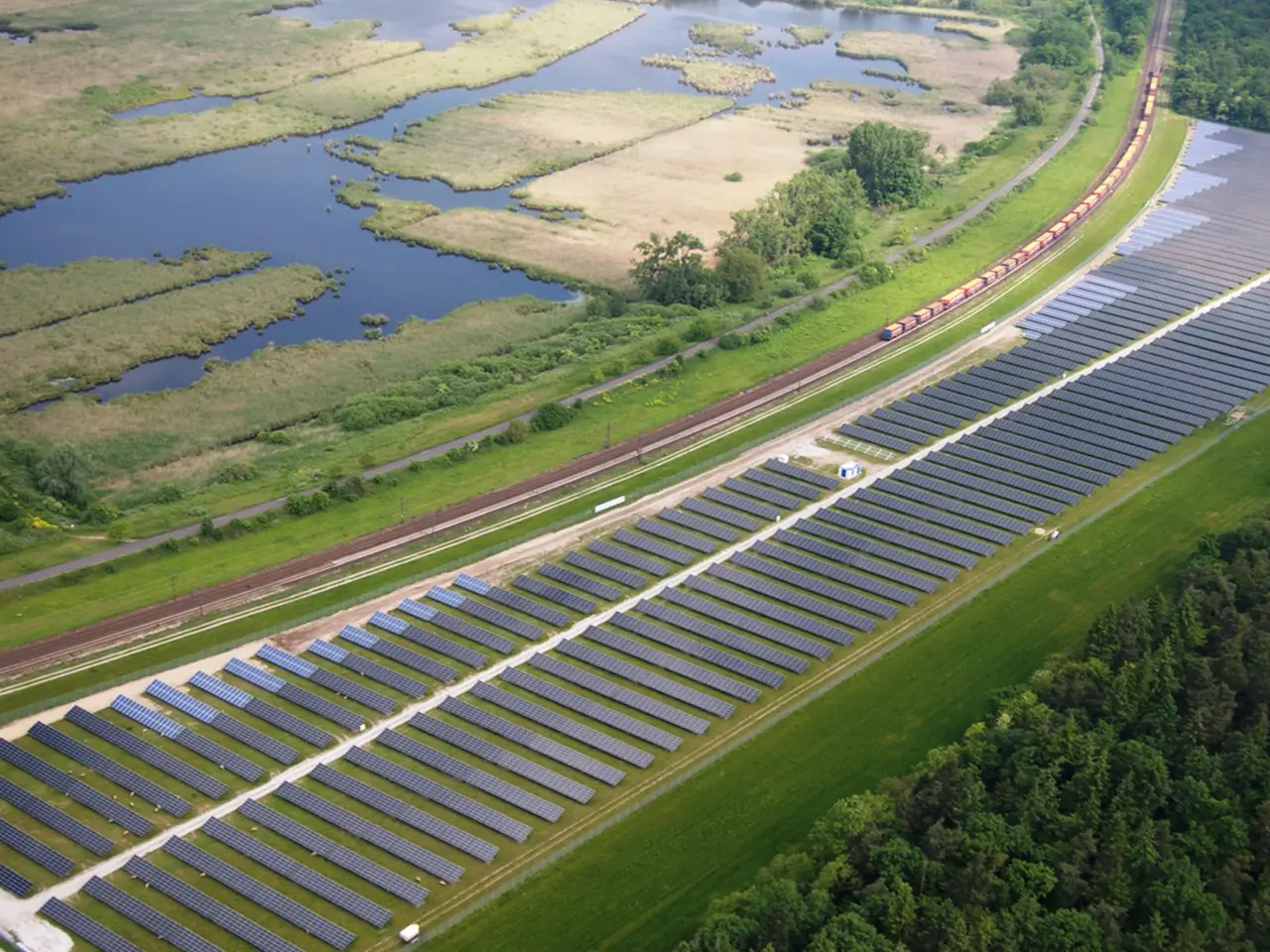
These panels could be used in locations where hydrogen is currently too expensive or logistically challenging to supply—particularly in areas lacking a hydrogen pipeline network. Mid-sized companies, for example in specialty chemicals, food processing, or metalworking, could meet their hydrogen needs directly on-site in the future. The panels could also be integrated into large-scale solar projects in regions with high solar irradiation.