Nuclear waste convoy reaches Ahaus amid protests and tight security
Nuclear Waste Shipment Arrives in Ahaus Amid Protests
The Castor cask arrived in Ahaus in the early hours of Wednesday morning, accompanied by demonstrations.
From the outskirts of the town, looking toward the nuclear waste interim storage facility—located roughly two kilometers away—the scene is striking. Dark fields stretch into the distance, punctuated by the flashing blue lights of police vehicles and the occasional beam of a searchlight. The road leading to the storage site itself is closed to traffic, with police vans stationed at every field path. Just in front of the facility, several floodlights have been erected. Shielded from the road by a fence, a vigil of anti-nuclear activists stands on a parking lot directly outside the gates.
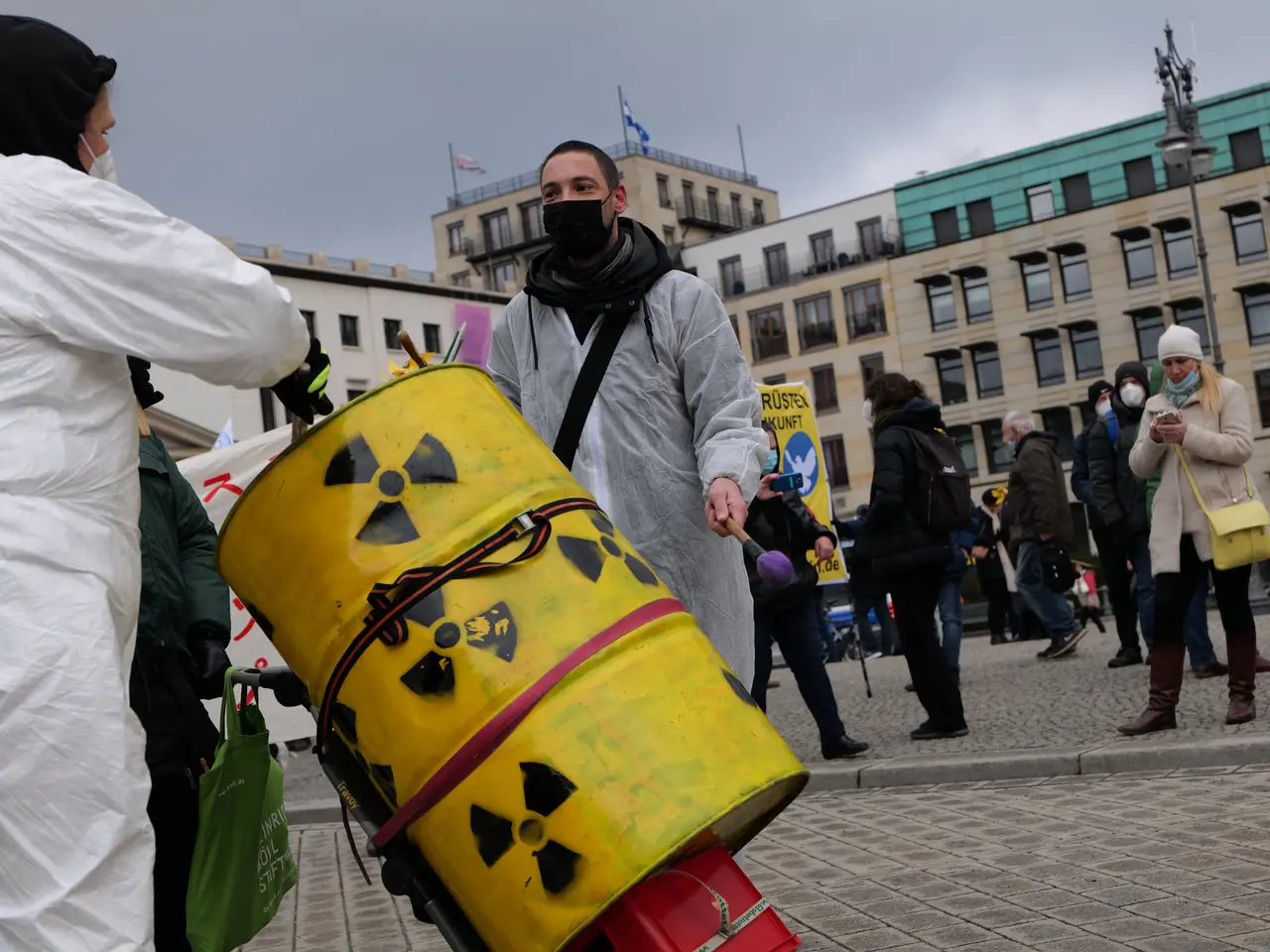
Yellow barrels marked with black Xs, "Nuclear Power? No Thanks" banners, and familiar protest symbols dominate the scene. It has been almost exactly 28 years since the first major shipment of nuclear waste arrived in Ahaus. Back then, Castor casks from the Neckarwestheim and Gundremmingen nuclear power plants were transported by train to the site, sparking mass protests. Thousands of people took to the streets, delaying the convoy multiple times with blockades.
On Tuesday evening around 8 p.m., only about 20 demonstrators gather outside the storage facility. Their numbers grow shortly afterward—but first, vigil organizer Hanna Poddig has to negotiate with police. Officers initially refuse to allow protesters to arrive by bicycle. After some time, the issue is resolved. The vigil swells, and Poddig takes a moment to explain the reasons behind the protest: "As long as no one knows where this waste is supposed to go, the rule must be: nothing in, nothing out." What she means is that Germany's unresolved question of a permanent repository for nuclear waste remains unanswered. Until a solution is found, she argues, all nuclear waste transports should be halted—each one carries risks. "Shipping highly radioactive material across North Rhine-Westphalia is absolute madness," Poddig says. Between 20 and 50 people will keep watch through the night, greeting the Castor's arrival around 2 a.m. with little enthusiasm.
The convoy had departed from the Jülich Research Center at around 10 a.m. A procession stretching several kilometers accompanied the specialized transporter. The state interior ministry later confirmed that radiation protection units, anti-drone defenses, and special forces were part of the 170-kilometer journey through North Rhine-Westphalia. No incidents were reported during the transport. Alexandra Dorndorf, Münster's police chief responsible for the operation, later called it "a good sign."
Patrick Schlüter, chair of the GdP police union in North Rhine-Westphalia, describes the mission as "poorly timed." With security forces already stretched thin, he says the transports push police to their limits—a "hard-to-justify" additional burden. According to the interior ministry, some 2,400 officers were deployed for Tuesday's operation. State Interior Minister Herbert Reul hopes for a "familiarization effect" over time. A maximum of three Castor transporters can operate simultaneously, meaning between 50 and 150 more shipments lie ahead—operations Reul says he "would gladly do without" but which "must be carried out." This carefully worded compromise reflects the position of the entire state government, a coalition of conservatives and Greens that pledged in 2022 to "minimize" nuclear transports. Now, however, a veritable "avalanche of Castor shipments" looms.
Opposition parties have also criticized the transports. Alexander Vogt, deputy leader of the SPD's parliamentary group, argues they could have been avoided. "But the state government deliberately chose not to push for a new interim storage facility in Jülich," he explains. Both the current and previous administrations, he claims, have "blocked a safe solution" for cost reasons. Kathrin Vogler, state spokesperson for the Left Party, joins the protests in Ahaus and keeps the local party office open late into the night as a refuge, offering fruit and warm drinks. She calls the transports the result of "political irresponsibility—for which Mona Neubaur bears primary blame." Neubaur, she says, failed to negotiate a solution that would keep the waste in Jülich, undermining the Greens' credibility. "Mona Neubaur must resign," Vogler demands on behalf of the Left Party.
Hanna Poddig, who had held out for hours before the interim storage site, considers the protest's opening a success. People had connected, built networks, and made new acquaintances. A symbolic sit-in demonstrated the direction future protests could take. "For upcoming transports, I hope more people will take the initiative and organize actions at multiple points along the route," Poddig adds, expressing her wish. The opportunities, she suggests, are there—it's just a matter of seizing them.