Extinguish fires, rescue injured - How does that work at sea? - Germany's Elite Firefighters Battle Blazes at Sea in Under an Hour
Northern Germany has built a robust system to tackle shipboard fires along its coastlines. The Central Command for Maritime Emergencies, known as the Havariekommando, leads the effort from its base in Cuxhaven. Specialised firefighting teams, drawn from eight coastal fire departments, stand ready to respond to emergencies at sea within an hour.
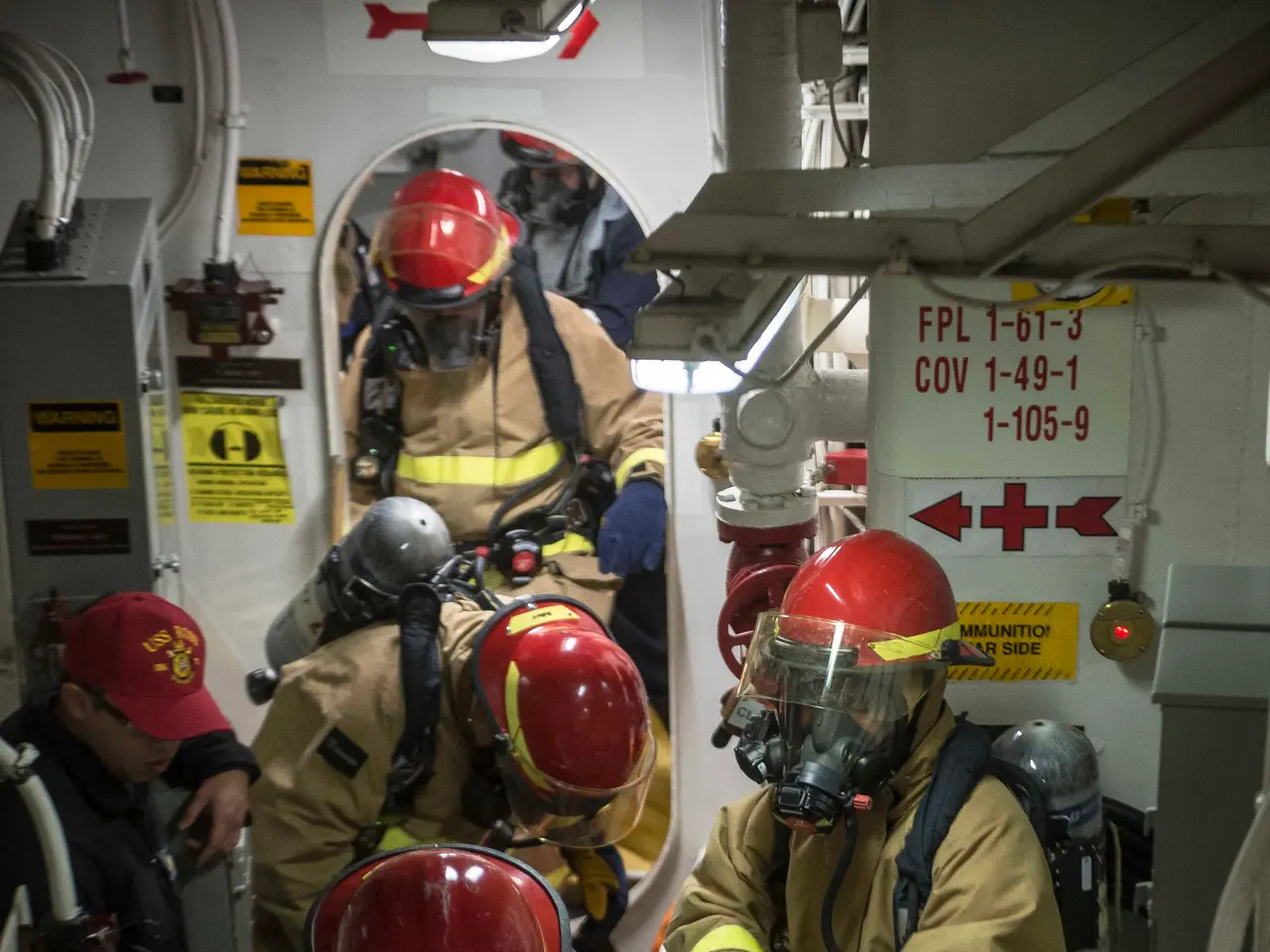
The Havariekommando coordinates responses to major maritime incidents, deploying teams from stations stretching from Emden to Brake and Stade. These firefighters belong to Maritime Incident Response Groups (MIRGs), which include three types: Firefighting Specialists (MIRG FiFi), Medical Response Teams (MIRG MR), and First Responders (MIRG FR). Each team can be sent anywhere within the command's jurisdiction, no matter where they are based.
Training takes place at dedicated facilities in Neustadt and Wilhelmshaven, where crews prepare for the challenges of modern vessels. Ships today are larger, carry more passengers, and use advanced technologies, making high-quality training essential. Since 2021, there have been 17 major responses requiring these specialised teams, with Germany facing an average of four to five complex maritime emergencies each year.
When an alarm sounds, response times range between 30 to 60 minutes. Teams are usually airlifted by helicopter, carrying standardised equipment limited to two large transport bags per crew. The gear is uniform across all stations, ensuring consistency in emergencies.
The system relies on rapid deployment and well-trained crews to handle fires at sea. With dedicated training sites and coordinated efforts, the Havariekommando ensures that fires on ships along Germany's northern coasts are met with a swift and effective response. The structure allows for flexibility, as any team can be sent to an emergency regardless of their home location.